
Your Shopping Cart


Halal Grocery Delivery vs Supermarket: Which Saves You More?
Every week, halal families in western Sydney face the same decision: drive to the supermarket and the halal butcher, or order online and have everything delivered? Both options get food on the table, but they differ significantly in cost, time, product range, freshness, and overall convenience.
If you have been doing the weekly grocery run on autopilot, it is worth stepping back and comparing the two approaches properly. For many families in the Hills Shire, Blacktown, Parramatta, and Hawkesbury, switching to halal grocery delivery has saved both money and hours of weekend time.
This article breaks down the real comparison. No sales pitch, just an honest look at where each option wins and where it falls short.
The Halal Shopping Problem in Western Sydney
Before comparing delivery versus supermarket, it helps to understand why halal grocery shopping is different from regular grocery shopping in the first place.
Most halal-conscious households cannot do a complete weekly shop in one place. A typical week might look like this:
-
Woolworths or Coles for general groceries (dairy, bread, cleaning products, some produce)
-
A halal butcher for certified halal meat (chicken, beef, lamb, goat)
-
A specialty Asian or South Asian grocery store for spices, rice, oils, lentils, pickles, and specialty items like Shan mixes, mustard oil, or Bengali fish
That is three stops, three trips, and three sets of driving, parking, and queuing. Families who need Bengali-specific items like katla fish, hilsha, shutki (dry fish), or Chinigura rice often need to drive even further, sometimes to Lakemba, Auburn, or Campbelltown, because these products are simply not available in their local area.
This is the core problem that halal grocery delivery services solve: combining halal meat, specialty groceries, and South Asian pantry staples into a single order, delivered to your door.
Cost Comparison: Delivery vs Supermarket
Let us look at actual costs. Many people assume delivery is more expensive, but that assumption does not always hold up when you account for the full picture.
Direct Product Cost
For general groceries (milk, bread, eggs, cleaning products), supermarkets like Woolworths and Coles are typically cheaper. Their scale allows them to negotiate lower wholesale prices, and their private-label products offer budget options.
For halal meat specifically, the comparison is closer than you might expect:
|
Product |
Supermarket (approx.) |
Halal Butcher (approx.) |
Hills Harvest (approx.) |
|
Whole chicken (~1.4kg) |
$6-8 (not always halal-certified) |
$7-10 |
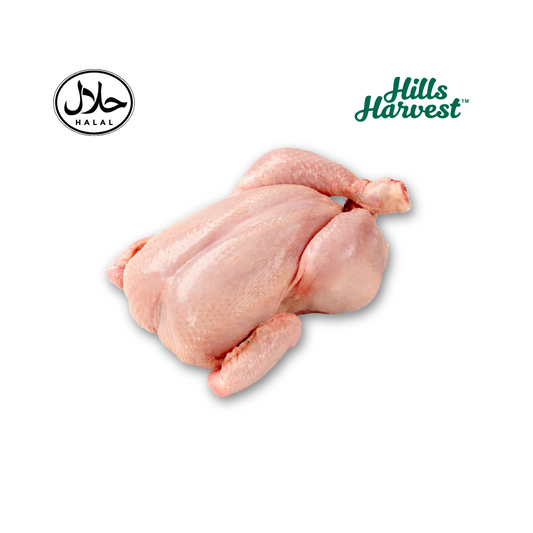
$6.99 |
|
Chicken breast (1kg) |
$10-14 |
$12-16 |
Competitive |
|
Beef mince (1kg) |
$12-16 |
$14-18 |
Competitive |
|
Goat curry cut (1kg) |
Rarely available |
$18-25 |
Competitive |
|
Lamb chops (1kg) |
$20-30 |
$22-28 |
Competitive |
|
Basmati rice (5kg) |
$12-18 |
$10-15 |
Competitive |
Key point: Supermarket halal meat (when available) is not always genuinely halal-certified. Some supermarkets stock halal-certified brands, but many do not clearly label their certification. If halal compliance matters to you, a dedicated halal supplier gives you certainty. Read our guide on what makes meat halal to understand what to look for.
Hidden Costs of Supermarket Shopping
The sticker price on a product is not the full cost. When you factor in the indirect costs of driving to multiple stores, the picture changes:
Fuel costs:
-
Average return trip to the supermarket: 10-20 km
-
Average return trip to a halal butcher (if not in your immediate suburb): 15-30 km
-
Average return trip to a specialty grocery: 20-50 km (especially for Bengali items from Lakemba or Auburn)
-
At current fuel prices ($1.80-2.10/litre), a 40 km round trip costs approximately $6-10 in fuel alone
Time costs:
-
Driving to and from one store: 30-60 minutes
-
Shopping in-store: 30-45 minutes per store
-
Total for a 2-3 store trip: 2-3 hours
If you value your time at even $20/hour (well below minimum wage), a 2.5-hour multi-store grocery trip "costs" $50 in lost time, on top of the fuel.
Impulse purchases:
-
Studies consistently show that in-store shoppers spend 15-25% more than planned due to impulse buys. End-of-aisle displays, checkout counter snacks, and "special" promotions drive unplanned spending.
-
Online shopping reduces impulse purchases because you add specific items to your cart deliberately.
Delivery Costs
Most online halal grocery delivery services charge a delivery fee on smaller orders. At Hills Harvest, delivery is free on all orders over $30. That is a remarkably low threshold compared to competitors:
|
Service |
Free Delivery Threshold |
|
Hills Harvest |
$30 |
|
Grocery Shop Online (GSO) |
Paid delivery starting from $12 (on orders $70-$150) |
|
Apni Dukaan |
$100 (members only) |
|
Baba G |
$200 |
|
Woolworths Online |
$0 (with Delivery Unlimited subscription, $119/year) or $3-15 per order |
|
Coles Online |
$0 (with Coles Plus, $19/month) or $3-15 per order |
For a household spending $50-80 per week on halal meat and groceries, the $30 free delivery threshold at Hills Harvest means delivery costs are effectively zero.
The Real Cost Comparison
Here is a realistic weekly scenario for a family of four in western Sydney:
|
Cost Factor |
Supermarket + Halal Butcher |
Hills Harvest Delivery |
|
Groceries |
$80-120 |
$60-90 (halal meat + specialty items only; general groceries from supermarket) |
|
Fuel (2 trips) |
$8-15 |
$0 |
|
Delivery fee |
$0 |
$0 (over $30) |
|
Time spent |
2-3 hours |
15-20 minutes (browsing and ordering online) |
|
Impulse purchases |
$10-25 extra |
Minimal |
|
Total estimated cost |
$98-160 |
$60-90 + time saved |
The takeaway: delivery is not necessarily more expensive. When you account for fuel, time, and impulse spending, it often works out cheaper, especially for the halal-specific portion of your weekly shop.
Product Range Comparison
What Supermarkets Offer
Woolworths and Coles carry a massive range of general groceries. For everyday items (dairy, bread, frozen foods, cleaning products, snacks, beverages), they are hard to beat. Some larger stores also carry a limited halal meat selection and a small international foods aisle.
Where supermarkets fall short for halal families:
-
Halal certification on meat is inconsistent and often unclear
-
Very limited range of halal cuts (you will not find goat curry pieces, beef shank, or whole hard chicken)
-
No Bengali fish varieties (katla, hilsha, rohu, pangas, shutki)
-
Limited South Asian spice range (basic spices only, no Shan mixes)
-
No mustard oil, or only one generic brand
-
No halal ready meals
-
No specialty items like puffed rice, flattened rice, or jaggery
What a Halal Butcher Offers
Dedicated halal butchers provide certified halal meat with a range of cuts suited to South Asian, Middle Eastern, and African cuisines. They are the traditional go-to for quality halal meat.
Where halal butchers fall short:
-
Meat only (no spices, rice, oils, or other groceries)
-
Limited to their physical location (you must drive there)
-
No delivery (most local butchers)
-
Stock varies day to day; popular cuts may sell out
-
No online ordering or browsing
What Halal Grocery Delivery Offers
A dedicated halal grocery delivery service like Hills Harvest combines the halal meat range of a butcher with the grocery breadth of a specialty store:
-
Halal meat: Chicken, beef, lamb, goat (full range of cuts including specialty items like hard chicken, tripe, giblets, t-bone steak)
-
Fish: Bengali fish varieties including katla, hilsha, rohu, pangas, shutki, and fish paste (bhorta)
-
Spices: Individual spices plus a wide range of Shan spice mixes (Biryani, Karahi, Nihari, Korma, and more)
-
Rice and lentils: Basmati, Chinigura, red lentils, chana dal, moong dal (browse pantry)
-
Oils: Mustard oil (Radhuni, Tez, Ispahani), vegetable oil (browse oils)
-
Pickles: Mango, mixed, lime, chilli, boroi (browse pickles)
-
Ready meals: Bhuna, polao, khichuri (browse ready meals)
-
Puffed and flattened rice: Muri, chira, puffed paddy (browse)
The range at Hills Harvest is specifically curated for the cooking styles and ingredient needs of South Asian and Bengali families in western Sydney. You will not find katla fish or Shan Nihari Mix at Woolworths.
Freshness Comparison
Supermarket Meat Freshness
Supermarket meat passes through a long supply chain: farm to processor to distribution centre to store to shelf. By the time you pick it up, it may have been sitting in the display case for 1-3 days (within food safety guidelines, but not at peak freshness). Supermarket meat is also typically packed on trays with modified atmosphere packaging (MAP), which extends shelf life but does not improve freshness.
Halal Butcher Freshness
Traditional halal butchers often receive deliveries daily or every few days. The meat is typically fresher than supermarket meat because the turnover is faster and the supply chain is shorter. However, once you buy it and drive home (especially in Sydney's summer heat), the cold chain can be broken.
Delivery Freshness
Online halal meat delivery services ship directly from their cold storage to your door. The meat stays chilled throughout transit in insulated packaging. At Hills Harvest, orders placed by 9:00 AM are delivered between 12:00 PM and 10:00 PM the same day, meaning the time between cold storage and your fridge is minimal.
For tips on keeping your delivered meat fresh once it arrives, see our guide on how to store fresh meat.
Convenience Comparison
This is where delivery wins decisively for most families.
Supermarket Shopping: The Reality
-
Drive to the store (15-30 minutes depending on traffic and distance)
-
Find parking (5-15 minutes at busy times, especially on weekends)
-
Walk the aisles, find your items, wait at the deli counter, queue at checkout (30-45 minutes)
-
Load the car, drive home, unpack (15-20 minutes)
-
Total: 1.5-2 hours per store
If you need halal meat from a separate butcher and specialty items from a third store, multiply accordingly.
Online Grocery Delivery: The Reality
-
Open the app or website on your phone or laptop (1 minute)
-
Browse, add items to cart (10-15 minutes)
-
Checkout (2 minutes)
-
Answer the door when your groceries arrive (1 minute)
-
Total: 15-20 minutes
For busy families, especially dual-income households or parents with young children, the time difference is significant. That is 2-4 hours per week returned to your life.
The Hybrid Approach: Best of Both Worlds
Many Hills Harvest customers use a hybrid approach:
-
Order halal meat, fish, spices, and specialty items from Hills Harvest (delivered Monday, Wednesday, or Friday)
-
Do a quick supermarket run for general groceries (dairy, bread, fresh produce, cleaning products) once per week
-
Skip the halal butcher and specialty store entirely
This reduces three shopping trips to one quick supermarket visit plus a 15-minute online order. You get the best of both worlds: supermarket prices for general items, and halal-certified specialty products delivered to your door.
Halal Certification: A Critical Difference
One factor that is often overlooked in the delivery vs supermarket comparison is halal certification reliability.
Supermarket Halal Claims
Some Australian supermarkets carry halal-certified meat brands. However:
-
Not all meat in the halal section is certified by the same body
-
Labelling can be inconsistent or confusing
-
Cross-contamination with non-halal products is possible in mixed-use display cases
-
Staff may not be knowledgeable about halal requirements if you have questions
Dedicated Halal Supplier Certification
A dedicated halal grocery service like Hills Harvest sources exclusively from halal-certified suppliers. Every meat product is halal. There is no mixed inventory, no ambiguity, and no risk of cross-contamination with non-halal items.
For families who take halal compliance seriously, this distinction matters. Learn more about Australian halal certification in our guide: What Makes Meat Halal?
Environmental Considerations
An often-overlooked benefit of delivery is the environmental impact.
Individual Car Trips
When every household drives separately to the supermarket and butcher, you have hundreds of individual car trips per day, each contributing to traffic congestion and carbon emissions.
Consolidated Delivery
A single delivery vehicle making multiple stops in a neighbourhood is significantly more efficient than each household driving individually. One Hills Harvest delivery run serves many families in the same area, reducing the total distance driven and the associated emissions.
This does not mean delivery is perfectly green (the vehicle still uses fuel), but on a per-household basis, it is typically better than every family making their own trip.
When Supermarket Shopping Still Makes Sense
Online halal grocery delivery does not replace everything. Here are the situations where a supermarket visit still makes sense:
-
Fresh produce: Fruit, vegetables, herbs, and salad items are still best selected in person where you can check ripeness and quality.
-
Dairy and refrigerated items: Milk, yoghurt, cheese, and eggs are supermarket staples that you will likely still buy there.
-
Cleaning and household products: Detergent, paper towels, toiletries. These are cheaper at supermarkets due to private-label options.
-
Bread and bakery items: Fresh bread is hard to deliver without quality loss.
-
Urgency: If you need something right now (not on a delivery day), a local store is the only option.
The smart approach is not to choose one or the other, but to combine them strategically.
Who Benefits Most from Halal Grocery Delivery?
Based on our experience serving western Sydney families, these households benefit most from switching to delivery:
Busy Working Parents
Dual-income families with children have the least time and the most to gain. Eliminating the weekend halal butcher trip alone saves 1-2 hours, and having specialty groceries delivered means one fewer stop during an already packed week.
Large Families and Regular Entertainers
Families who cook large quantities regularly (weekly family dinners, frequent guests, community gatherings) benefit from the ability to order in bulk online. Planning for Eid celebrations or large gatherings is far easier when you can add everything to a cart and have it delivered.
Bengali Families in Western Sydney
If your cooking relies on katla fish, hilsha, mustard oil, Chinigura rice, shutki, or other Bengali staples, these items are extremely difficult to find in Hills Shire, Blacktown, or Hawkesbury. Before Hills Harvest, many Bengali families drove to Lakemba, Auburn, or Campbelltown for these ingredients. Delivery eliminates that entirely.
Elderly or Mobility-Limited Shoppers
For older community members who find it difficult to drive or carry heavy groceries (bags of rice, bottles of oil), delivery is a practical solution that helps them maintain independence.
Anyone Who Values Their Time
If you would rather spend your Saturday morning with family, at the park, or doing anything other than navigating a crowded supermarket car park, delivery is for you.
Frequently Asked Questions
Is halal grocery delivery more expensive than shopping in-store?
Not necessarily. While some individual products may cost slightly more than supermarket equivalents, delivery eliminates fuel costs ($8-15 per trip), saves 2-3 hours per week, and reduces impulse spending. When you factor in the full cost of driving to multiple stores, delivery often works out cheaper for the halal-specific portion of your grocery shop.
Can I do my entire weekly shop through halal grocery delivery?
You can order all your halal meat, fish, spices, rice, lentils, oils, pickles, and ready meals from Hills Harvest. For general groceries (dairy, bread, fresh produce, cleaning products), most families still do a quick supermarket run. The hybrid approach reduces three shopping trips to one.
How fresh is delivered halal meat compared to the butcher?
Delivery meat goes directly from cold storage to your door in insulated packaging, typically arriving within hours of your order. This cold chain is often more consistent than buying from a butcher and driving home in Sydney traffic, especially during warmer months.
Do I need to be home for delivery?
Check with your delivery service about safe-drop options. Hills Harvest delivers between 12:00 PM and 10:00 PM on delivery days (Monday, Wednesday, Friday), and you should be available to receive your order to maintain the cold chain for meat products.
What if I need something urgently on a non-delivery day?
For urgent needs, a local store is still the best option. Hills Harvest delivers on Monday, Wednesday, and Friday. Planning your weekly order around these days, and keeping a small stock of pantry staples at home, minimises the need for emergency shopping trips.
Is the halal certification more reliable with delivery than at the supermarket?
Generally, yes. A dedicated halal grocery service sources exclusively from halal-certified suppliers and stocks no non-halal meat products. Supermarkets may carry some halal-certified brands, but labelling is inconsistent and cross-contamination with non-halal items is possible in mixed display cases. Learn more about halal certification.
How does delivery work at Hills Harvest?
Order by 9:00 AM on Monday, Wednesday, or Friday and your groceries are delivered between 12:00 PM and 10:00 PM the same day. Orders over $30 qualify for free delivery. The service covers Hills Shire, Blacktown, Parramatta, and Hawkesbury. Full delivery details.
Can I save money by buying halal meat in bulk online?
Yes. Online ordering makes it easy to buy larger quantities (multiple kilograms of chicken, beef, or goat) in a single order without the inconvenience of carrying heavy bags from the store. Combined with free delivery over $30, bulk ordering online is both practical and cost-effective.
Try the Smarter Way to Shop Halal
See the difference for yourself. Order your halal meat, fish, spices, and groceries from Hills Harvest and get them delivered to your door in western Sydney. Free delivery on orders over $30, same-day on Monday, Wednesday, and Friday.